
Our family of solutions for home use includes Kaspersky Safe Kids, which scans all websites that children try to access. If a site falls into one of the 14 categories listed below, the product sends an anonymous notification to Kaspersky Security Network without sharing any personal user data. Parents decide what content to block and configure the solution accordingly. However, anonymous statistics are still collected for all 14 categories.
The information for this report was collected from Windows PCs and laptops, as well as iOS and Android mobile devices, over a 12-month period from May 2025 to April 2026.
Kaspersky Safe Kids has the following web filtering categories:
- Anonymizers
- Religions, religious associations
- Job search
- Alcohol, tobacco, drugs
- Weapons, explosives, military
- Violence
- Gambling, lotteries, sweepstakes
- Profanity
- News media
- Adult content
- E-Commerce
- Video games
- Internet communication
- Software, audio, video
Search query filtering
Search queries provide valuable insights into what kids are interested in. Kaspersky Safe Kids is designed to filter queries in five search engines (Bing, Google, Mail.ru, Yahoo!, Yandex) and on YouTube. Queries are filtered based on six potentially dangerous topics: adult content, alcohol, drugs, tobacco, racism, and profanity.
This report includes statistics on search queries on YouTube and Google from March to May of 2026. We define 100% as the total number of queries in the top 1,000 YouTube and Google search queries. Ranking is based on search volume, regardless of region, and popularity is measured as a percentage of total queries.
We divide search queries into the following categories and subcategories.
Google:
- YouTube gaming influencer
- Adult content
- Movies, cartoons and TV shows
- News
- Memes
- Music
- Shops
- Miscellaneous
- Sports
- Online education
- Video streaming platform
- Video games
- Communication
- Apps and tools
YouTube:
- Online education
- News
- Sports
- Memes
- Miscellaneous
- Video games
- Movies, cartoons and TV shows
- YouTube gaming influencer
- YouTube bloggers and channels
- Music
Program control
Kaspersky Safe Kids lets parents control and limit how much time their children spend using different apps on their devices. For this study, we used anonymized data from May 2025 through April 2026 on the amount of time kids around the world spent using apps on Android devices.
The top 20 most popular apps are ranked based on the total time spent on them, not divided by region. Each app’s ranking reflects its share of the total time children spent using it.
Popular site categories
Let’s start by looking at the distribution of website categories and which sites kids visited most often. We’ll compare their behavior on Windows devices and on Android and iOS mobile devices.
Windows, Android and iOS website categories. May 2025 through April 2026
The lion’s share of triggered events on both Windows and mobile devices belongs to the Software, audio, video category. This category includes online movie theaters, video and music streaming services, and many other sites related to software and video/audio content. Windows (63.09%) has a far bigger share than mobile platforms (38.90%). This is likely because children tend to watch videos on mobile devices using apps like YouTube (as we’ll see), while they use a browser on desktops.
In second place is the Internet communication category, which covers forums, social networks, chats, messaging apps and dating sites (neutral, without adult content). Interestingly, this category accounts for a higher share of detections on mobile platforms (33.22%) than on desktops (23.20%).
Children visited gaming sites more often from mobile devices than from desktops. The share of the Video games category on Windows is 2.66%, versus 6.90% on Android/iOS.
Kids also visit online stores more often from mobile devices than from desktops. The figures for the E-Commerce category are 2.03% on Windows and 6.43% on mobile devices.
Adult content is not a primary interest among children, but neither is the percentage of visits to websites with pornographic and erotic content the lowest: only 1.33% on computers and laptops, but a much higher 4.25% on personal smartphones, which is to be expected.
Children also kept an eye on news sites. The News media category accounts for 3.76% of visits on Android/iOS and 3.52% on Windows devices. Note that this category comprises not only political news, but also the latest in tech, gaming and other specific topics.
Sites dedicated to religion, encryption, traffic anonymization methods, and job searches were least popular with kids. The Job search category picked up a mere 0.36% on mobile devices and 0.07% on PCs. Both the Religions, religious associations and Anonymizers categories scored 0.00% on personal mobile devices. However, although kids show next to no interest in religious topics, the situation with anonymizers is more nuanced, as we’ll see below.
This statistical picture illustrates that children have a greater sense of privacy on personal mobile devices. We see this from their online behavior, particularly the higher percentage of Adult content detections on mobile devices than on PCs, and the large share of visits to sites in personal interest categories, such as Video games and E-commerce.
Most popular Android apps
As noted above, children’s activity on mobile devices is more varied. Let’s take a look at the top 25 Android apps where kids worldwide spent the most time. The most-visited site, YouTube, has topped the rankings for many years now. In the top 25 apps visited by children, its share is 29.06%. TikTok still lags far behind YouTube in terms of usage time, with a 12.09% share, placing it third in the top 25.
In second place, with 16.18%, sits WhatsApp. Other top 25 messaging apps include: Snapchat (1.92%) – although more of a hybrid social network and messaging app, we’ll consider it primarily as a place for communication; Telegram (1.73%); Messenger from Meta (0.67%); Viber (0.63%); and Discord (0.52%).
The fourth most popular app, and the traditional rival to Minecraft for kids’ attention, is Roblox with 9.22%. As for Minecraft, it is way down in 17th place with 0.67%. Children also spend time playing Brawl Stars (2.00%), the second most popular game according to our statistics, as well as Clash Royale (1.14%), EA Sports FC Mobile (0.45%), and the mini-game Block Blast (0.36%).
Instagram retains a solid user base among children, ranking fifth on 8.33%. That contrasts with Facebook, where kids spend much less time (1.41% among the top 25 apps). Another social network featured in the ranking is Pinterest, with a 0.84% share.
Android app popularity. May 2025 through April 2026
Alongside vloggers, games, social networks and messaging apps, children devote time to browsing in Chrome (7.08%), watching movies and TV shows on Netflix (1.62%), streaming music on Spotify (1.28%) and YouTube Music (0.62%), communicating with ChatGPT (0.77%) and Character.AI (0.44%), learning languages on Duolingo (0.49%), and editing videos in CapCut (0.41%).
What kids search for on Google
We’ve already looked at what sites kids visit most often and which apps they use the most. For a deeper understanding of what really interests today’s young minds, we need to dive into search queries. Let’s start by looking at some of the topics and queries that children googled most of all.
The largest share of queries went to Apps and tools (31.04%). In second place were Communication (19.27%) queries related to social networks, messaging apps, and email services. Below, we’ll take a closer look at the specific apps, tools, and communication methods that kids searched for.
Popular search queries in Google. March – May 2026
Video games (16.11%) came third by search share. The top queries were “poki” (free online games at Poki), “roblox”, “crazy games” (free online games at CrazyGames), “geometry dash”, and “minecraft”.
Searches for video streaming platforms ranked fourth with a share of 8.72%, the most popular being for YouTube (in various forms), “netflix”, “twitch”, “prime video”, “9anime”, and “disney plus”.
Education-related queries ranked fifth. The Online education category accounted for 7.33%. Besides educational platforms such as Google Classrooms, Duolingo, GeoGebra, and others, kids searched for the programming languages Scratch and Python, the periodic table of chemical elements (in various languages) and the Artemis II space mission.

Screenshot https://www.nasa.gov/artemis-ii-multimedia/
As for Sports (6.13%), kids’ most common queries were “nba”, “premier league”, “real madrid”, and “arsenal”. Other interest areas were Shops (2.59%; top queries: “amazon”, “temu”, “shein”, “ebay”) and Music (1.94%; top queries: “spotify”, “youtube music”, “soundcloud”, “bts”, “katseye”, “wonyoung”, “sabrina carpenter”, “justin bieber”, “billie eilish”).
The Memes category accounted for 1.23% of all Google queries we examined, with the most searched-for meme being “6-7” (six seven). News (1.20%) also caught kids’ attention, with “news”, “iran”, “trump”, and “epstein” among the top searches.
As for Movies, cartoons and TV shows (0.98%), the most frequent searches were for anime portals like “crunchyroll”, “aniwatch” and “anime” in general. Among TV shows, “stranger things” took top spot.
Apps and tools
Search queries related to Apps and tools are the most popular on Google. Let’s get more granular.
Popular search queries in Google, Apps and Tools topic. March – May 2026
AI tools came top by search share. They account for no less than 41.36% of all queries in the Apps and tools category. Children looked for (in order of frequency): “chatgpt”, “gemini”, “deepseek”, “claude”, “copilot”, “grok” and “character ai”. This tells us that kids have fully embraced AI and are integrating it into their daily lives.
Queries related to text translation are in second place, with 28.08%. The most common query is the word “translator” or similar in various languages, and the most frequently searched-for online translator is Google Translate.
The Others section (11.17%) includes a variety of apps and tools that resist neat classification, such as “calculator”, “speed test” and “stopwatch”.
Edit tools have a 7.52% share, with Canva and CapCut the most popular.
Search engines comprise 5.69% of Apps and tools queries. Kids using Google most frequently searched for “google” (note that the address bar in most browsers doubles up as a search bar), “yahoo”, and “duckduckgo”.
The most popular query in the Docs section (5.18%) was “google docs”, followed by “google drive” and “microsoft word”.
The emergence of “VPN” in the top 1000 Google search queries warrants a special mention. Although the share of searches on this topic is not massive, kids are showing more interest in this privacy and anonymization tool. It currently makes up 0.43% of searches in the Apps and tools category.
Browser-related searches (0.30%) round out this topic. The privacy-focused Brave browser heads the list of these queries, confirming the interest in – and demand for – online privacy among younger users.
Communication
Search queries related to Communication divide into three main categories. Social networks (56.67%) account for more than half of searches on this topic, followed by messaging apps (29.05%) in second place and email services (14.28%) bringing up the rear.
Popular search queries in Google, Communication topic. March – May 2026
The top trending social networks by search volume are Instagram, Pinterest, TikTok, Facebook and Reddit. The top messaging apps searched for by kids are WhatsApp Web, Telegram and Google Meet. And the most popular email services are Gmail, Outlook and Yahoo Mail.
What kids search for on YouTube
YouTube retains its crown as the most popular platform among children worldwide. Therefore, by analyzing kids’ YouTube queries, we can drill down into what they are really interested in today.
Popular search queries in YouTube. March – May 2026
Music-related searches top the list, accounting for 26.22% of the top 1000 YouTube queries. Interestingly, the most popular query is – and has been for several years now – “phonk”. The second most popular query is the pop group “katseye”, in particular their track “pinky up”. Next come K-poppers “blackpink”, “bts” and “babymonster”. Kids also searched for the “coachella” festival and performers Sabrina Carpenter, Olivia Rodrigo and Billie Eilish.
In second place are searches related to YouTube bloggers and channels featuring diverse content (lifestyle, challenges, DIY, unboxing, reviews and much more) – excluded here are gaming influencers, as we’ve given them a separate category. YouTube bloggers and channels account for 18.02%. MrBeast remains the most popular YouTuber among kids. Hard on his heels come Jordan Matter, Dhar Mann Studios, IShowSpeed, Fede Vigevani, Enaldinho, Mastu, SQUEEZIE and LolloLacustre.
YouTube gaming influencers take third place with 15.49%. Topping the list are: Dream, SSundee, Jazzghost, Unchained_Off and Caylus.
Fourth place goes to Movies, cartoons and TV shows with 14.69%. We’ve subdivided this category into: Cartoons, Movies, Anime & Manga and TV shows, which we’ll look at in more detail below.
Next are searches on the topic of Video games, with 11.15%. The top searches include “minecraft”, “roblox”, “brawl stars”, “fortnite” and numerous queries related to the Roblox metaverse.
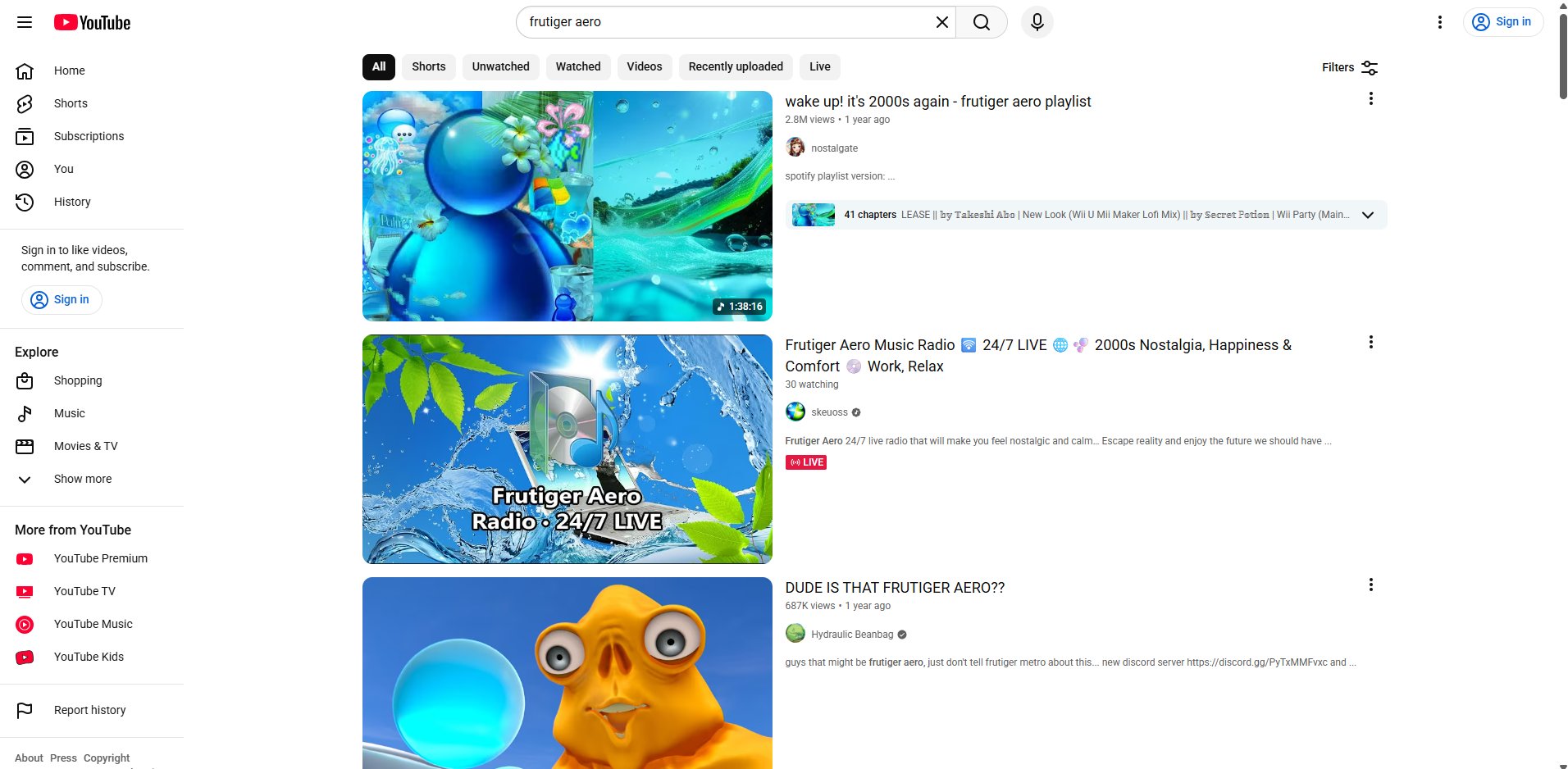
The Miscellaneous section (7.11%) is a repository for queries that don’t readily fit into the above categories, such as “shortsІ”, “mukbang”, “lego”, “tiktok” and searches related to the mid-2000s Frutiger Aero design aesthetic.
In the seventh-placed Memes category (2.94%), the viral track “Doot (6 7)” by Skrilla is unrivaled. Absurd and nonsensical it may be (some call it brainrot), but it’s spawned the world-conquering 6-7 (six seven) meme.
The last three places are filled by search query topics: Sports (1.73%; top queries “football”, “nba”, “nhl”, “f1”); News (1.61%; top queries: “news”, “iran”, “jeffrey epstein”); Online education (1.04%; top queries: “nasa”, “artemis 2”, “artemis 2 live”, “duolingo”, “scratch”, “python”).
Movies, cartoons and TV-shows
Popular search queries in YouTube Search, Movies, cartoons and TV-shows topic. March – May 2026
Cartoons (53.48%) topped children’s most-searched-for list. The most popular searches were for the independent animation studio GLITCH, the first-person narrative storytime platform MSA (My Story Animated), the kids’ animated video channel Cocomelon – Nursery Rhymes, and the official YouTube channel of the animated series Bluey.
Movie-related queries came second, scoring 18.77%. Youngsters were most interested in indie film studio A24’s big-screen adaptation of Kane Parsons’ creepypasta web series Backrooms, released on May 29, 2026. Besides this eagerly awaited frightfest, kids searched for The Bad Guys 2, Rock Dog, The Super Mario Galaxy Movie and Spider-Man.
Anime & Manga ranked third with 14.43% of all searches in the Movies, cartoons and TV shows category. The most common queries were “anime”, “sailor piece”, “doraemon”, “one piece” and “naruto”.
TV shows ranked last with 13.32%. The most searched-for were the Filipino supernatural thriller Hell University, the superhero animated series Invincible, the US medical drama Chicago Med, and season three of Euphoria.
Conclusion
Contrary to popular belief, children are not degenerating online. Rather, they are digital natives who are squeezing everything they can from the internet.
As we’ve seen, they incorporate AI into their daily lives, follow events like the Artemis II mission in real time, keep up to speed on world news and affairs, and use the internet for educational purposes, including learning programming and natural languages. Nevertheless, we must not ignore the need for a safe and welcoming online space for intellectual development and entertainment. The virtual world is crawling with threats and our job as adults is to help children navigate it safely, which we can only do by understanding their interests and the online environment they inhabit. Failing that, we risk not only overlooking real threats, but damaging the delicate trust-based parent-child relationship through overly strict digital curfews. For a full understanding of your child’s online behavior, we recommend Kaspersky Safe Kids.
Kaspersky Safe Kids regularly receives high ratings in independent tests from top labs, including AV‑Comparatives and AV‑Test. These endorsements highlight the product’s exceptional ability to detect and block inappropriate content across web browsers and streaming services, while also offering robust features like screen‑time management, location tracking and real‑time activity reporting. By combining advanced threat‑detection technologies with user‑friendly controls, Kaspersky Safe Kids provides parents with reliable, industry‑validated protection that helps keep children safe in today’s digital environment.